Is Trogir still worth visiting in late September or October? For a lot of trips, yes — with fewer people and gentler heat. But the weather is less of a sure thing and some seasonal services wind down, so it pays to plan with a bit of flexibility.
Written by Ante Milic
Last reviewed: 18 July 2026
There's no hard line on a calendar — an early-October week can feel like September, and a late-September spell can turn autumnal. Treat these as tendencies, not promises.
A climate average tells you what a month is usually like — it is not a forecast for your particular week. Both months can throw up mixed days.
You might get a run of warm, still days and then a cooler, cloudier spell. Short, heavy downpours are common in autumn, and the odd longer wet phase is realistic — plan a loose itinerary you can reshuffle.
A strong wind can change a beach afternoon or a boat plan more than a bit of cloud does. It affects the sea state as much as the comfort — worth checking before committing to anything on the water.
For the current outlook, warnings and the marine forecast for the Adriatic, use the national weather service, DHMZ (meteo.hr). If conditions look marginal for swimming or a boat, don't make that safety call yourself — follow the operator's and the authorities' guidance.
Often, yes — but honestly, this is where the shoulder season is least predictable, and where personal tolerance decides a lot.
The sea holds onto summer's warmth for a while, so many people happily swim through September. On a warm, still day it can feel much like August.
Plenty of people still swim in October; plenty find it too cool. The same water can feel pleasant to one person and bracing to another, and sunshine, wind and time of day all shift how it feels. There's no guarantee either way.
Water shoes for the pebble beaches, and a windproof layer plus a towel you can wrap up in for after your swim, make a cooler-day dip far more enjoyable. Aim for the warmest, least windy part of the day. For where to go, see our Trogir beaches guide.
Sightseeing is more relaxed than in July and August, and evenings can be genuinely calm. It's a good time to actually linger over the old town rather than shuffle through it.
Trogir is a popular day-trip stop, so the main square and the Riva can still fill up for a few hours around the middle of the day, especially in September. Early morning and evening are the quiet windows.
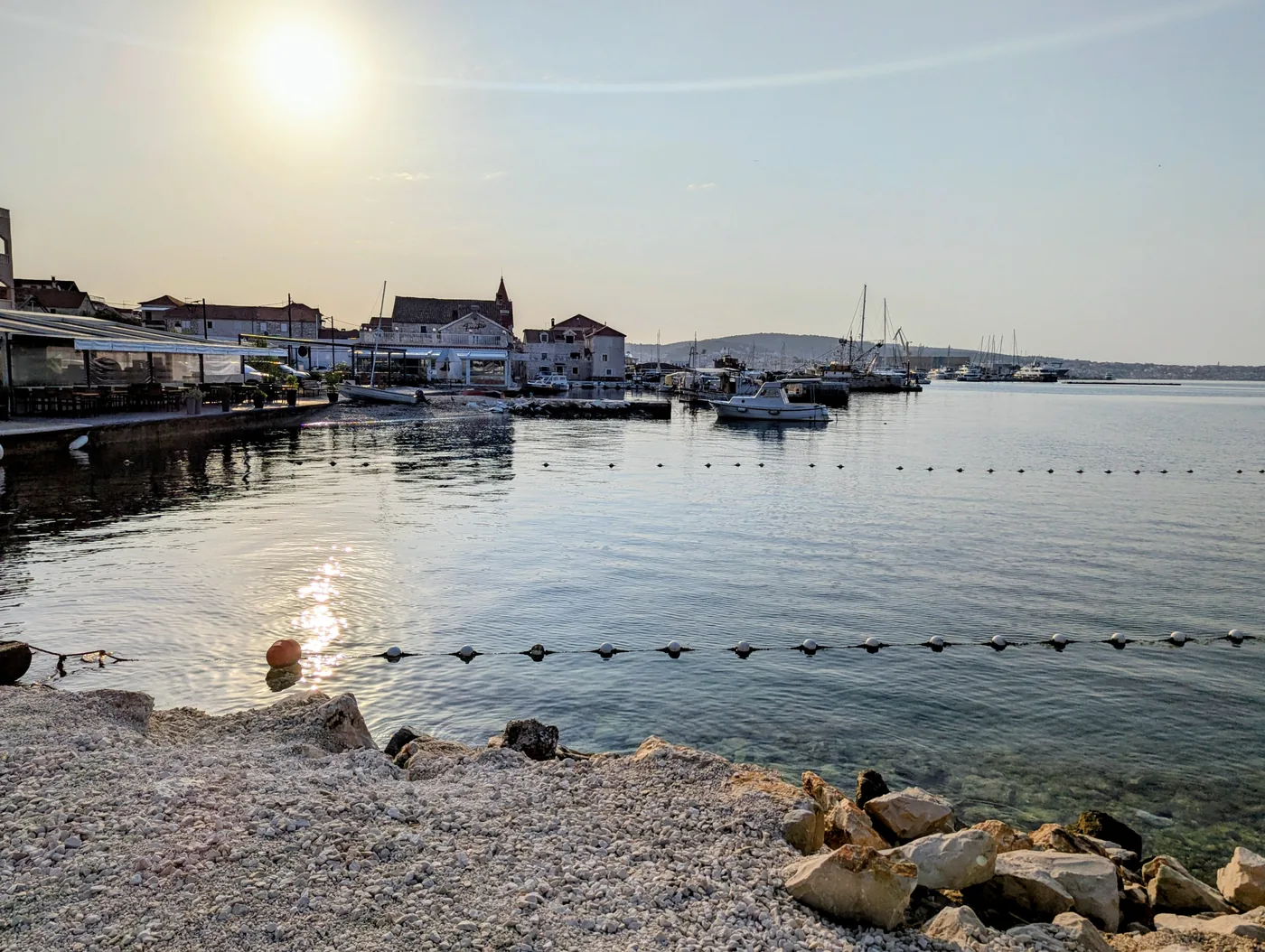
📷 Our photo
The town keeps working — but the seasonal edges thin out, and this is exactly the kind of thing to confirm rather than assume.
The old town, the green market, shops and many restaurants stay relevant right through autumn — Trogir is a lived-in place, not just a summer resort.
Some beach bars, tour desks and summer-only spots cut their hours or close for the year, more so in October than September. Hours can also change at short notice with the weather.
If a particular restaurant or activity matters to you, confirm it directly a day or two before — we can't promise a full open-or-closed list, and it shifts year to year.
This is the most weather- and season-dependent part of a shoulder-season trip.
September usually still has a decent choice of trips; by October the number of departures and organised tours drops off. Weather and swell can also cancel or move a sailing at short notice.
The Trogir–Split boat and the island links run to seasonal timetables that change through the year — check current sailings directly with the operators: Jadrolinija, TP Line and Bura Line. Background on the trips themselves is in our Trogir boat tours guide.
Quieter beaches are one of the season's real pleasures — just go in with the right expectations. The profiles are in our beaches guide.
Space to yourself, less need to chase shade, and a much calmer feel at spots like Okrug, Medena and Pantan than in peak August. A quiet cove on a warm October morning is a lovely thing.
Some beach bars and rental stands may be shut, there's less on-site infrastructure, and wind or an earlier evening chill can shorten the day. Bring what you need rather than relying on finding it there.
Land-based trips actually get better as the heat drops — the water-based ones need a closer eye on the season.
Cooler weather makes wandering Diocletian's Palace and climbing Marjan more pleasant, and it's an easy no-car day by bus or, while it runs, the seasonal boat. Check the day's return times. See our Split day trip guide.
Autumn light and thinner crowds suit the waterfalls, though swimming rules and boat services at the park are seasonal. Reach it by regional bus with connections or an organised tour — neither is automatically better. Confirm current details with the national park; more in our Krka guide.
A full day via Split's ferry port. Very doable early in the season, but ferry frequency and island buses thin out into October, so build the return around the current timetable. Details in our Brač guide.
A full day through Split by catamaran. This is the one most exposed to the season: departures and the last boat back change through autumn, so verify the operators' timetables before you plan it. See our Hvar guide.
Dubrovnik is a big undertaking as a day trip from Trogir at any time of year — a long road each way that eats most of the day. In the shoulder season it can still work as a one-off if you accept the driving, but it's better as an overnight. Our Dubrovnik guide lays out the reality.
The old town, its churches, small museums and cafés carry a wet morning nicely, and Split is the bigger indoor fallback a short hop away. Our rainy day guide has honest ideas for when the weather turns.
Not sure what fits today's weather and your energy? Our Trogir day planner suggests a plan, and what's on this week may make the choice for you. When it's windy, skip the boat unless the operator is running and check current warnings first.
Nothing heavier than that — this is a mild-autumn coast, not a winter trip. One warm layer and a rain option cover almost everything.
Sightseeing, walking and day trips are simply more pleasant without the peak-summer glare — the old town in soft autumn light is a different experience.
Shorter queues, easier tables and calmer streets outside the midday day-trip window.
Accommodation prices frequently ease after the peak — though this varies by property and dates, so compare rather than assume.
The coast road and the town's car parks tend to be less pressured than in August — generally, not always. A car-free trip also works well this time of year.
A flexible shape rather than a fixed schedule — swap days around the forecast as you go.