How to visit Split from Trogir, what to see in one day and why I prefer it as a day trip rather than a place to stay.
Written by Ante Milic · Last updated July 2026
Split is the largest city in Dalmatia and Croatia's second-largest — and it sits just 27 km from Trogir. That makes it one of the easiest big days out you can have here: real Roman history, proper city energy, and you're back in Trogir for a quiet dinner.
You can go by car, by bus or — in the warmer months — by boat. For a relaxed day trip I usually prefer the boat: no hunting for a parking space, and the ride along the coast already feels like part of the holiday.
A passenger boat runs between Trogir's waterfront (Obala kralja Zvonimira) and Split harbour, taking around an hour. No parking, no traffic — and arriving in Split from the water is the nicest first look at the city.
It runs to a seasonal timetable and tickets are bought on board — check the current timetable and prices on the official Bura Line site before you go.
Roughly 30–40 minutes along the coast depending on traffic. You set your own times — but in July and August the traffic into Split and the parking near the centre can eat into the day.
If you drive, decide where you'll park before you go rather than circling the centre on arrival.
Local buses run between Trogir and Split regularly and are the cheapest option — good if you don't have a hire car and the boat times don't fit.
Check the current departure times before setting off, and allow extra time in summer traffic. More in our Split ↔ Trogir transport guide.
Not to scale — a schematic of the day. Check the current boat timetable before you plan around it.
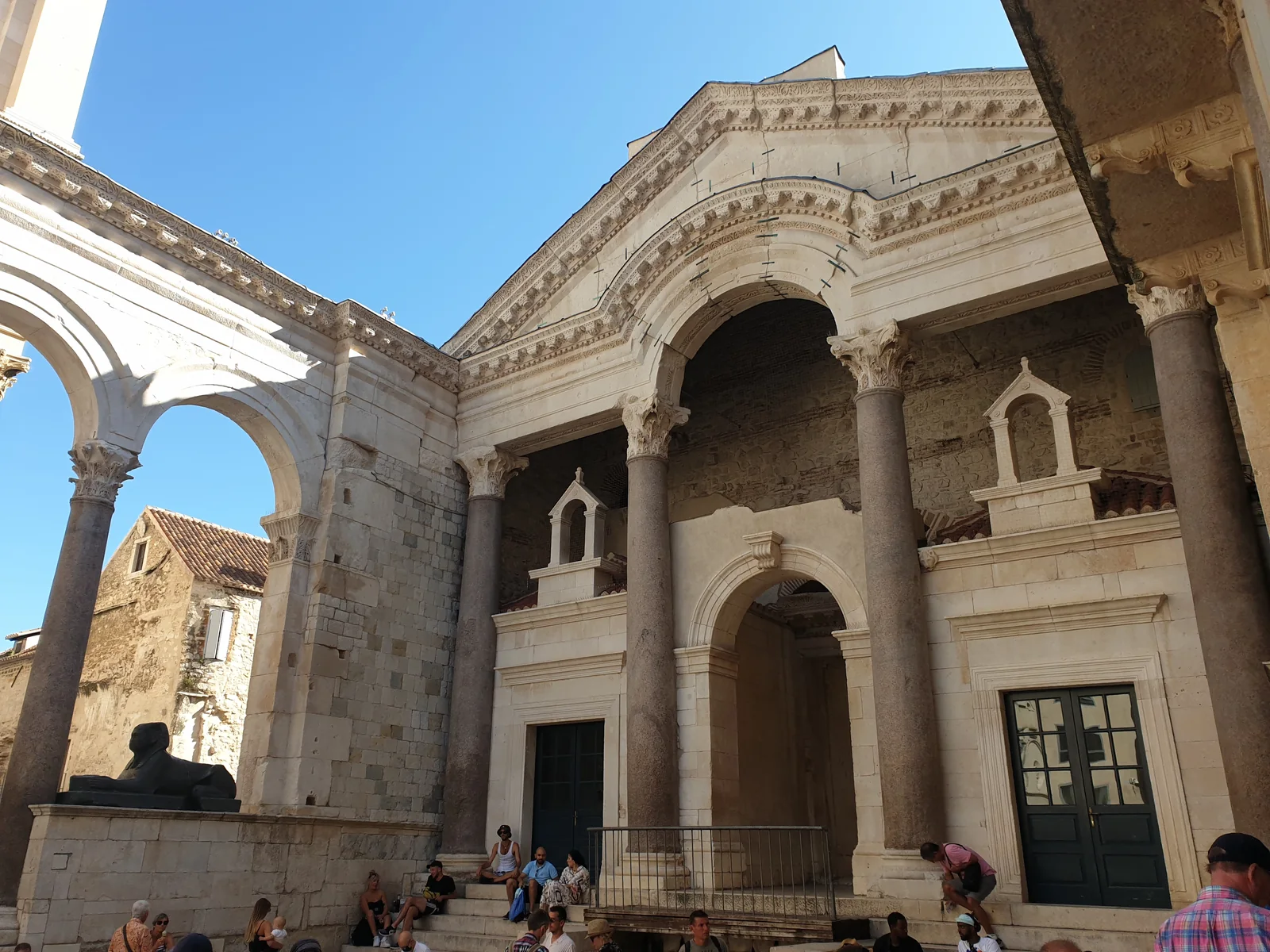
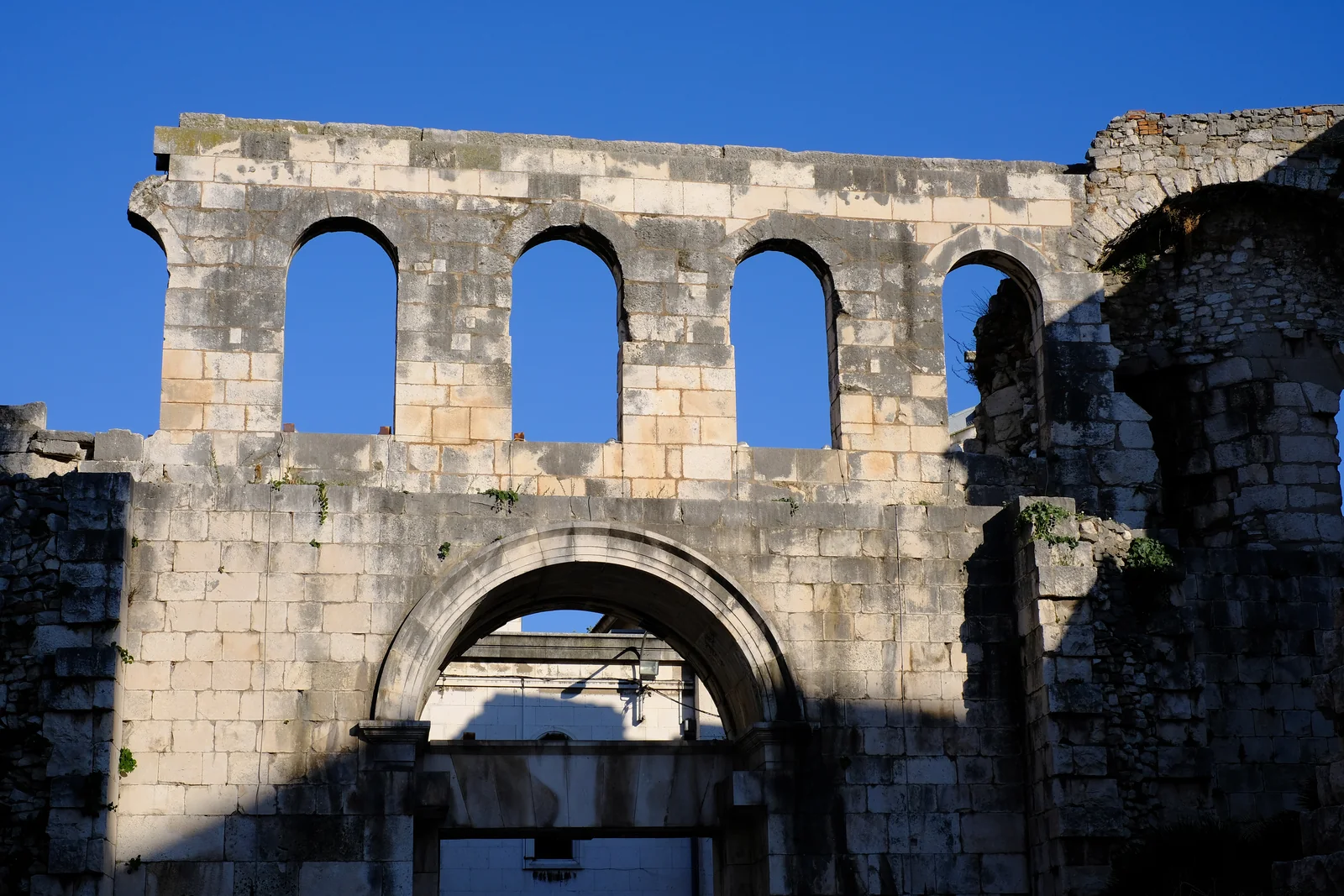
Split's old town isn't next to a Roman monument — it grew inside one. Diocletian's Palace was built in the 4th century as the emperor's retirement residence, and over the centuries the city simply moved in: today there are homes, cafés and shops built directly into the Roman walls. The whole complex is a UNESCO World Heritage Site, and you wander through it rather than queue for it.
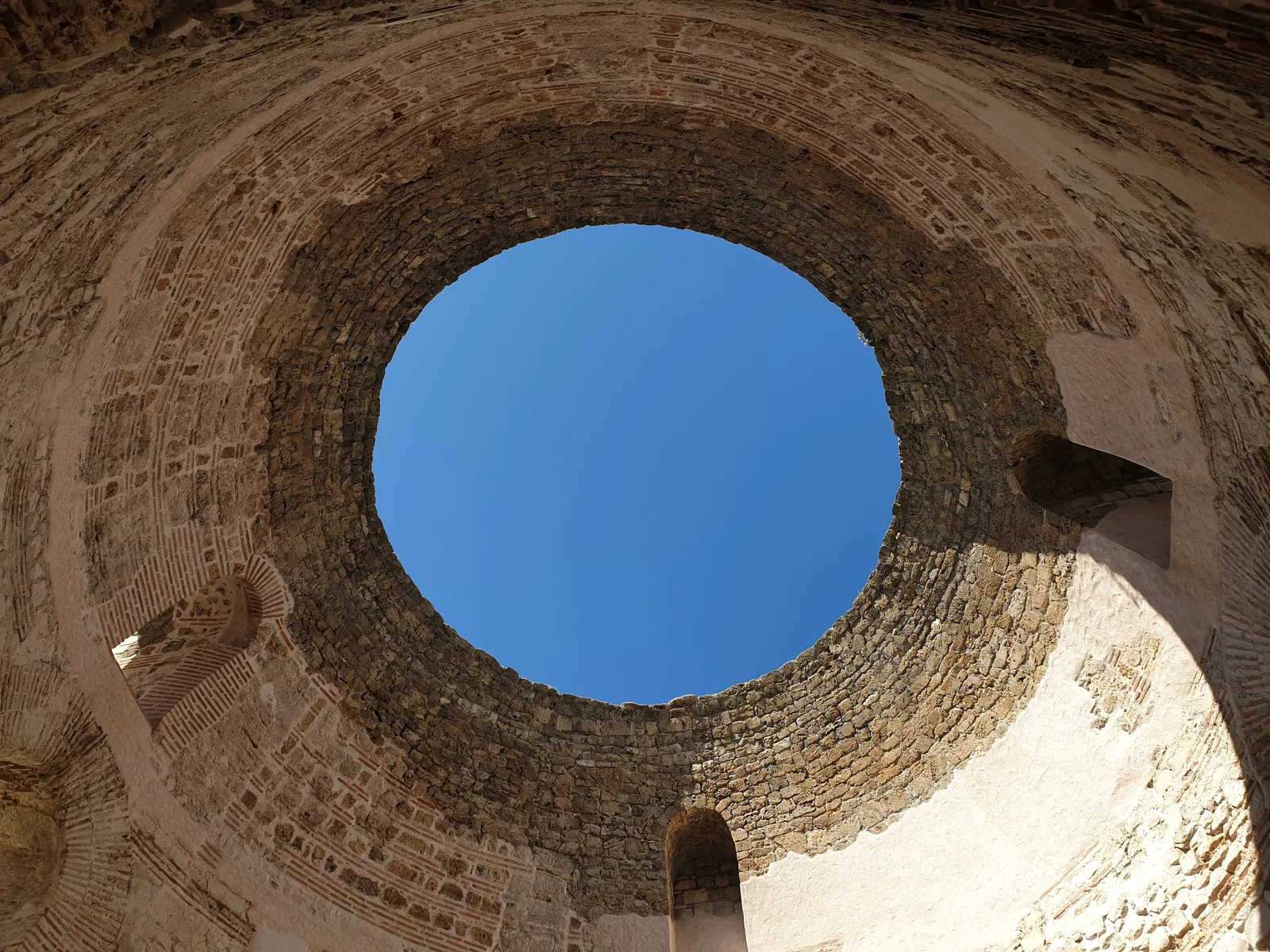
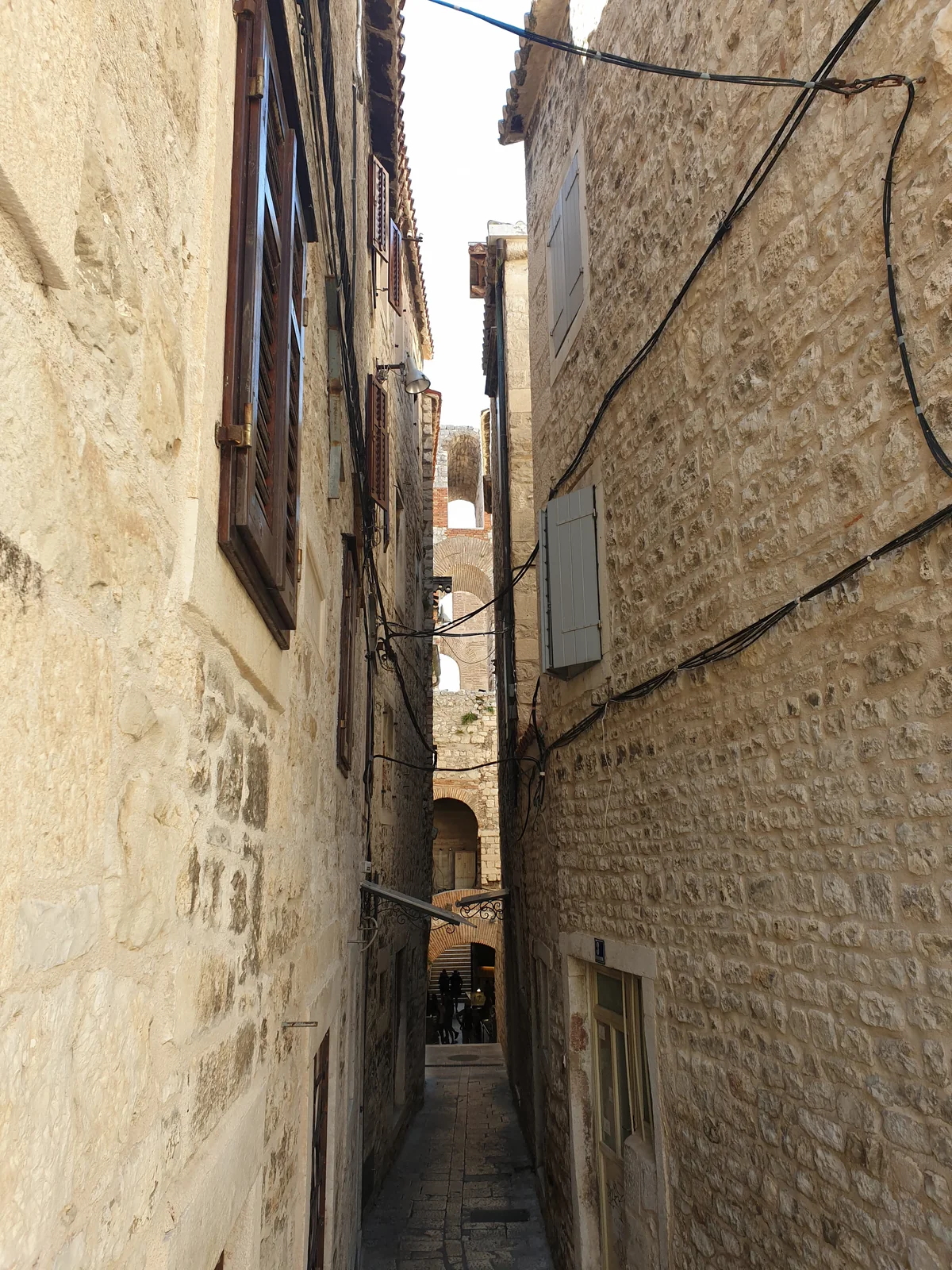
Give it time to be aimless. The Peristyle is the set-piece, but the joy is the side lanes — one wrong turn and you're standing under a 1,700-year-old arch with someone's washing strung above it. Don't miss the Vestibule, the domed entrance hall with its open circle of sky.
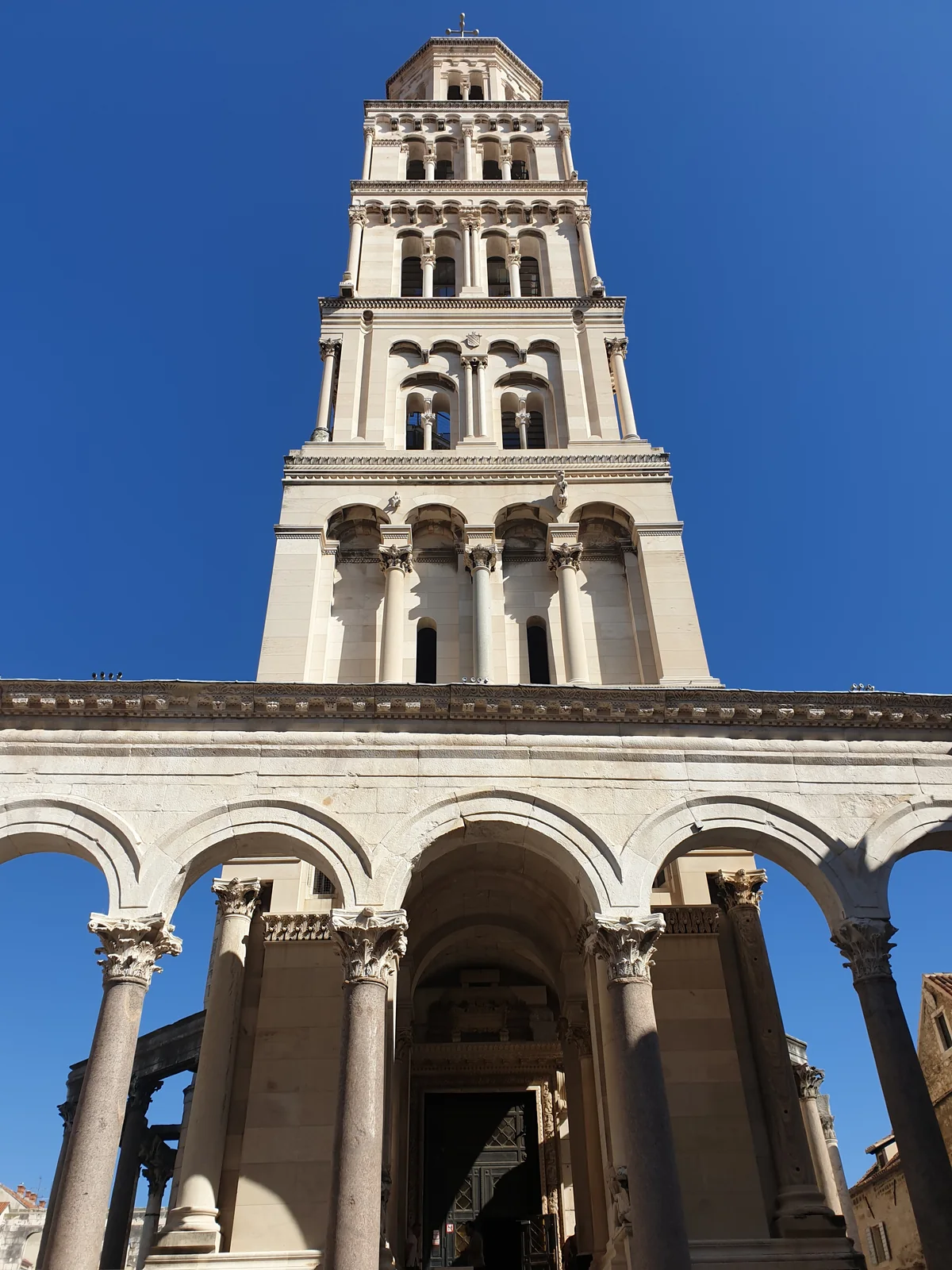
Right on the Peristyle stands the Cathedral of Saint Domnius — Sveti Duje to locals. It began as Diocletian's own mausoleum; the irony is that the emperor who persecuted Christians now has a cathedral built around his tomb chamber. It's one of the oldest cathedral buildings in the world still in use.
If you have a head for heights and the queue is reasonable, the Romanesque bell tower can be climbed for a view over the palace rooftops and the harbour — worthwhile, but not essential if the Marjan walk is already on your list.
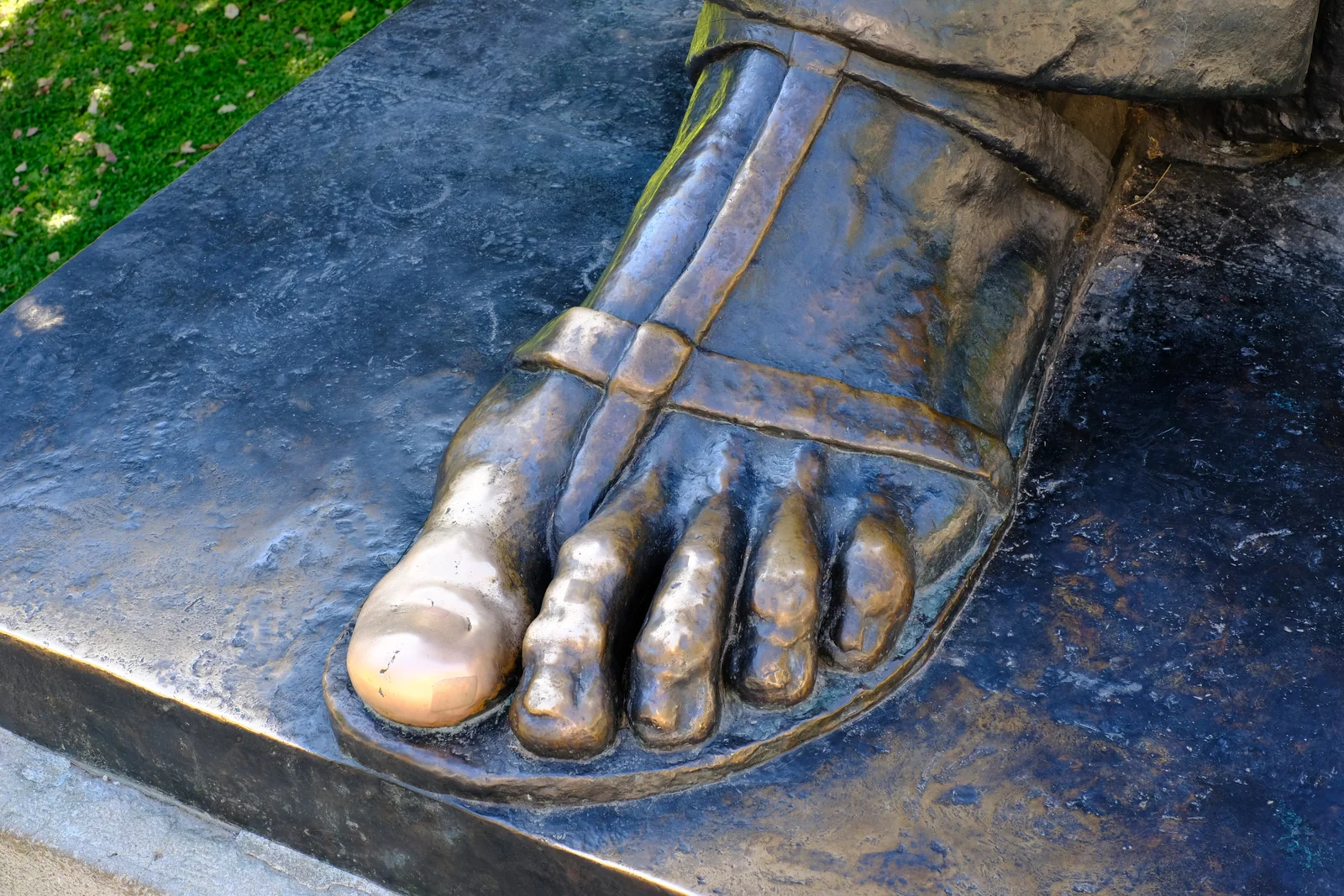
Just outside the Golden Gate, on the palace's north side, stands Ivan Meštrović's huge bronze statue of Gregory of Nin, the medieval bishop who fought for church services in Croatian rather than Latin.
The tradition: you rub his big toe for luck. You'll spot it before you spot the plaque — the toe gleams gold against the dark bronze from all the hands. It takes two minutes, it's free, and yes, we do it every time.
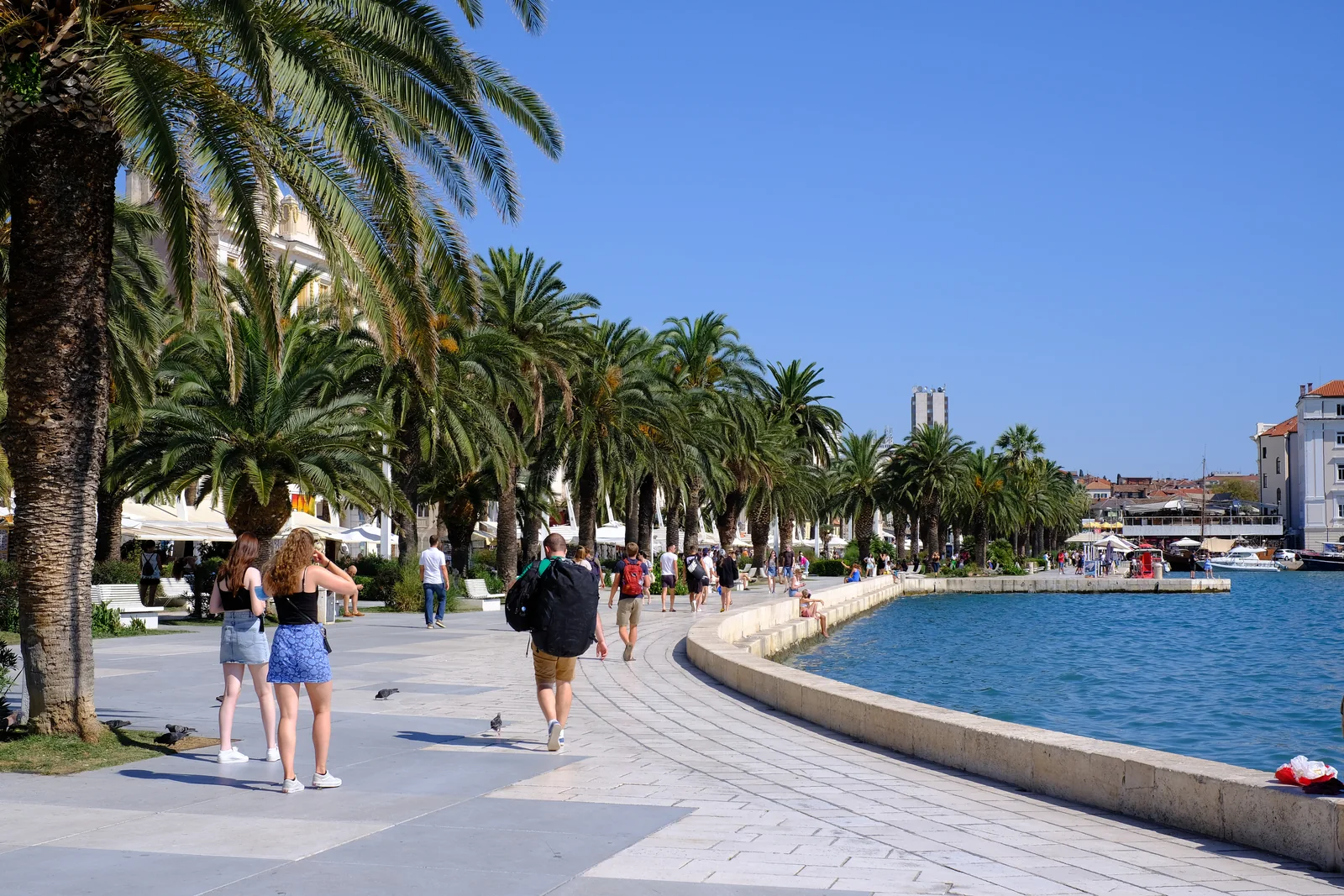
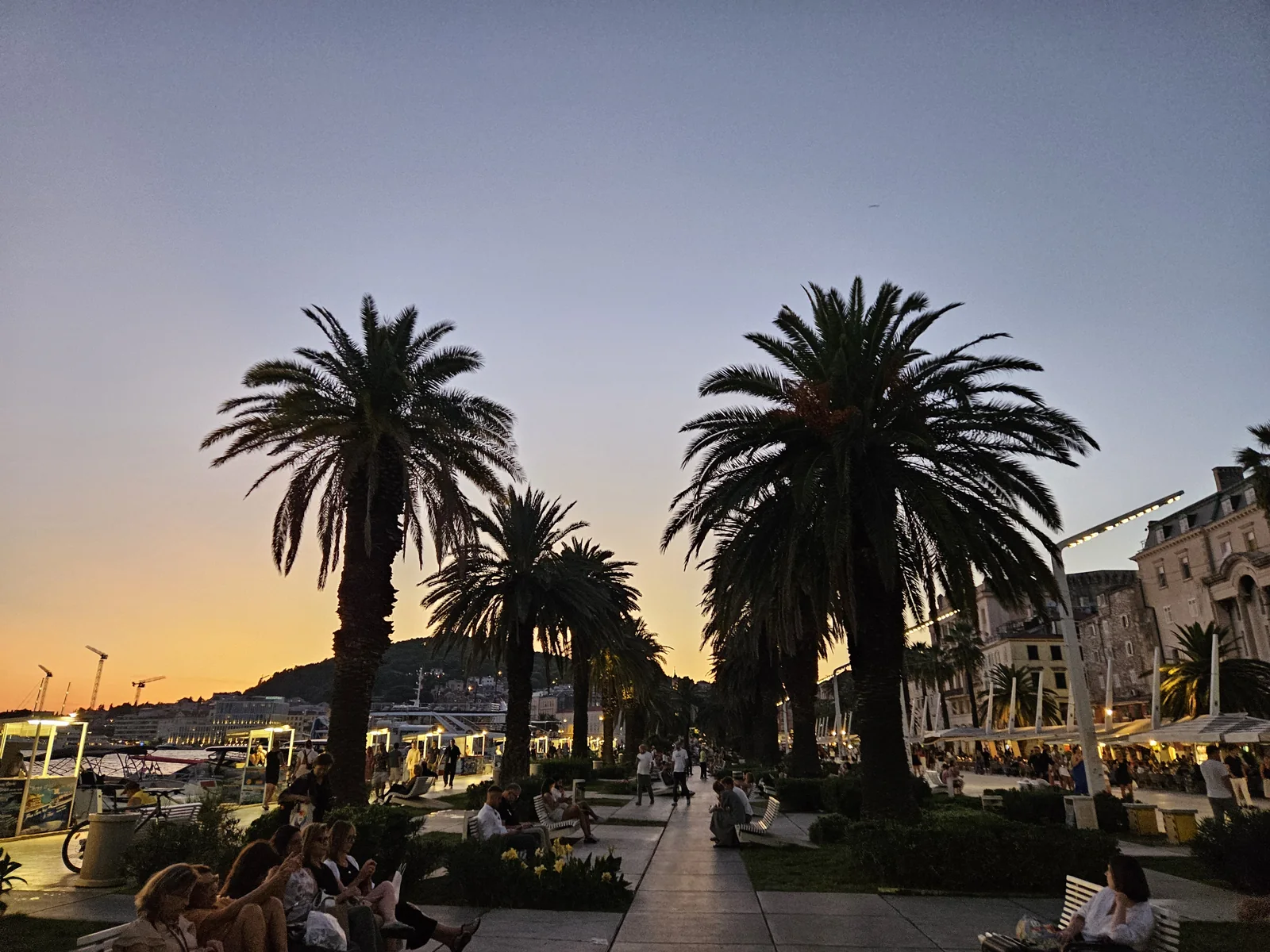
Split's harbour-front promenade runs the length of the palace's south wall — palms, café awnings and a steady parade of the whole city walking past. It's the obvious place for a coffee, and people-watching here is a legitimate activity, not a way to kill time.
Prices on the front row are city prices; if you want the same coffee for less, walk one or two lanes back. But once per visit, the front row is worth it.
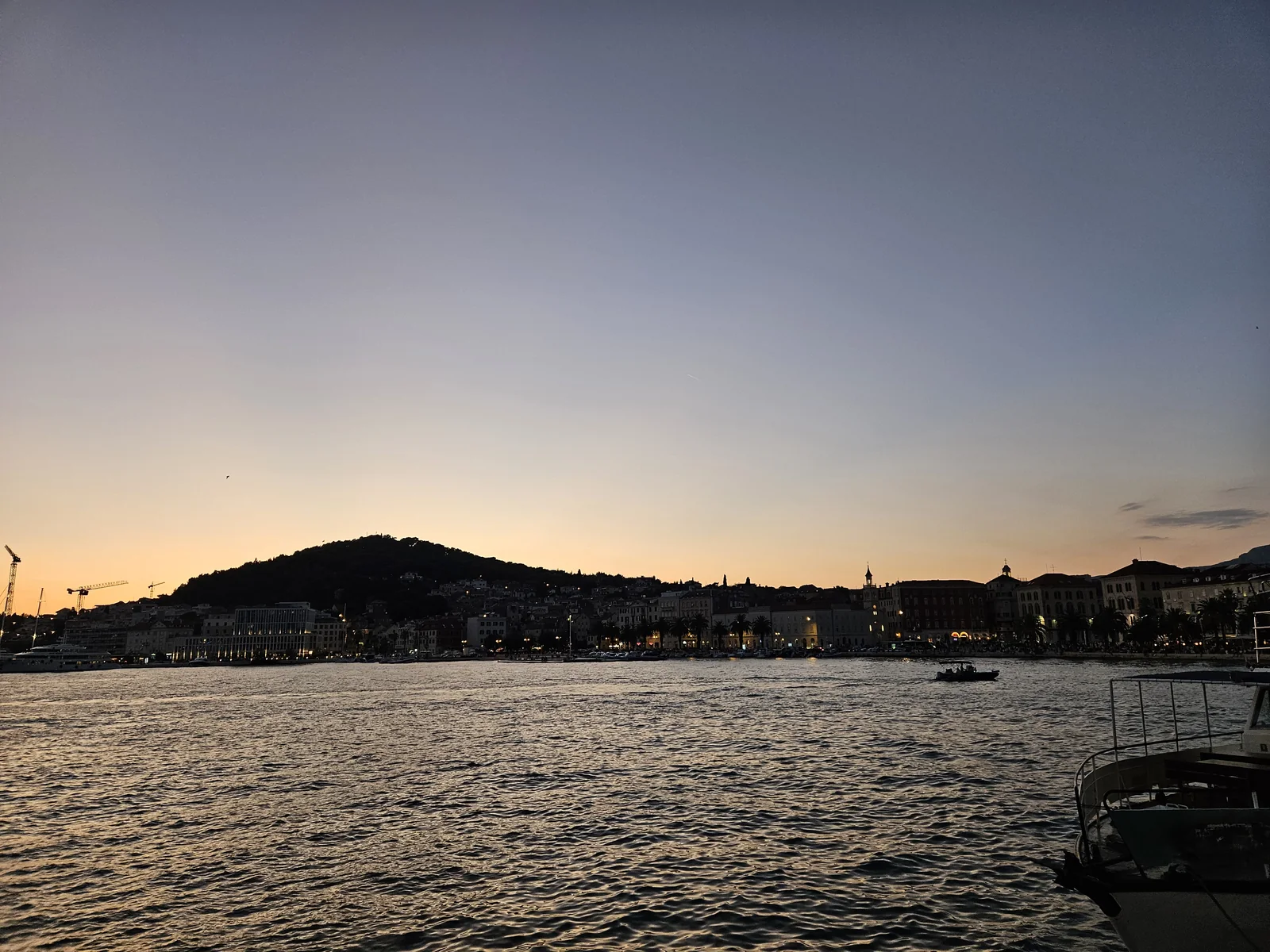
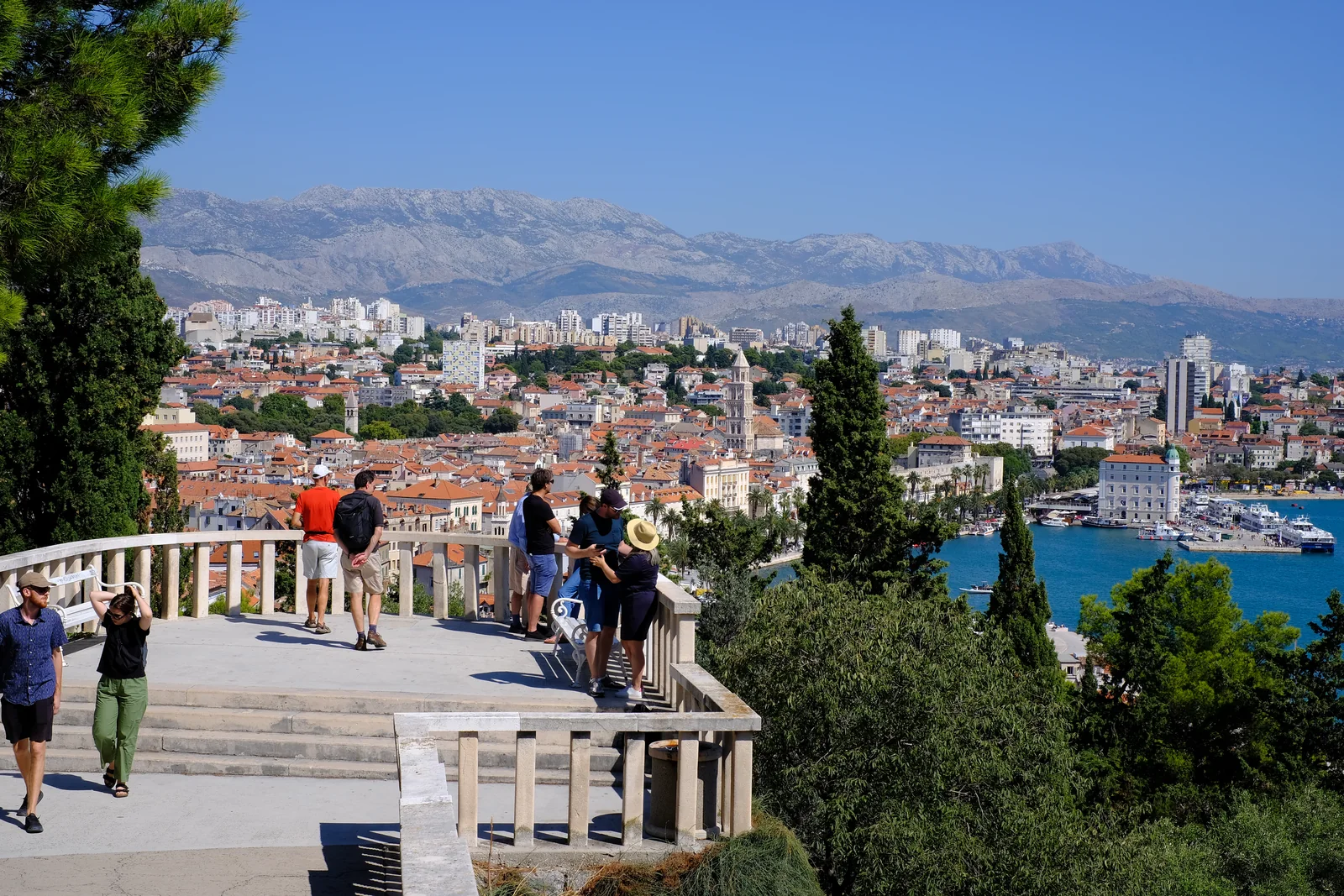
West of the old town rises Marjan, the pine-covered hill the locals treat as their park. Steps lead up from the Varoš quarter to a stone viewpoint terrace with the classic look back over the rooftops, the harbour and the mountains behind — the view on this page's hero photo is from up there.
It's a proper walk in summer heat, so save it for the afternoon only if you have the time and energy — and take water. If the day is already full, the Riva end of Marjan's paths still gives you a taste of the pines without the full climb.
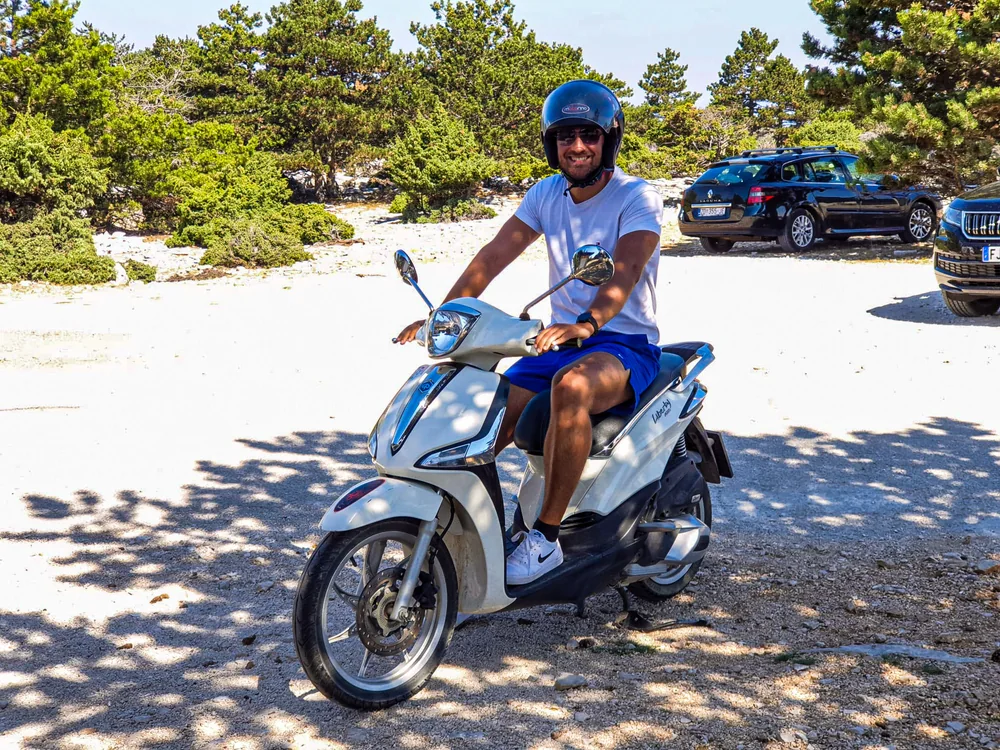
"Split is absolutely worth visiting — but for me it works best as a day trip. I prefer staying in Trogir because it feels smaller, calmer and more compact."
I've been going to Split since I was a child — my aunt lives there, so it's never been a tourist city to me. And that's exactly why I'd say this: it's ideal for a day, but I wouldn't want to spend my whole holiday there. In high season the city is very full and feels strongly tuned to tourism, and hotels and apartments are often pricier than in Trogir.
What I miss in Split is the compactness I love about Trogir: the narrow lanes where everything is two minutes away, the cafés where you recognise faces by day three. Split gives you scale and spectacle; Trogir gives you a place that fits in your pocket. Visit one, stay in the other — see our honest Trogir or Split comparison if you're still deciding.
About 27 km along the coast. You can go by car or bus (roughly 30 to 40 minutes depending on traffic) or, in the warmer months, by boat — Bura Line runs a passenger service between Trogir and Split that takes around an hour. Check the current timetable and prices before you go.
Yes — especially for Roman history, a bigger-city atmosphere, cafés and the Marjan viewpoint. Diocletian's Palace and the old town fill a relaxed day comfortably, and you are back in Trogir by evening.
In summer, the boat is the most relaxed option if the timetable fits your day — no parking, and the ride itself is part of the trip. Otherwise the bus is the budget-friendly choice; check current departure times before setting off.