How to visit Hvar from Trogir, what to see in one day and how to plan your route without rushing too much.
Written by Ante Milic · Last updated July 2026
The night before one of our Hvar days, we scribbled the plan on a scrap of paper: Stari Grad, Hvar, Vrboska, Jelsa. Four places, one day. It was too ambitious — and that's the most useful thing this guide can tell you.
Hvar is a genuine full-day escape from Trogir: you cross via Split, and the boat ride alone makes it feel like a proper journey. But the island is nearly 70 km long. This guide covers how to get there, what each place is like, and two routes that actually work in a single day.

There's no direct public boat from Trogir itself — you go via Split ferry port, about 30–40 minutes away depending on traffic. From there you have two honest options.
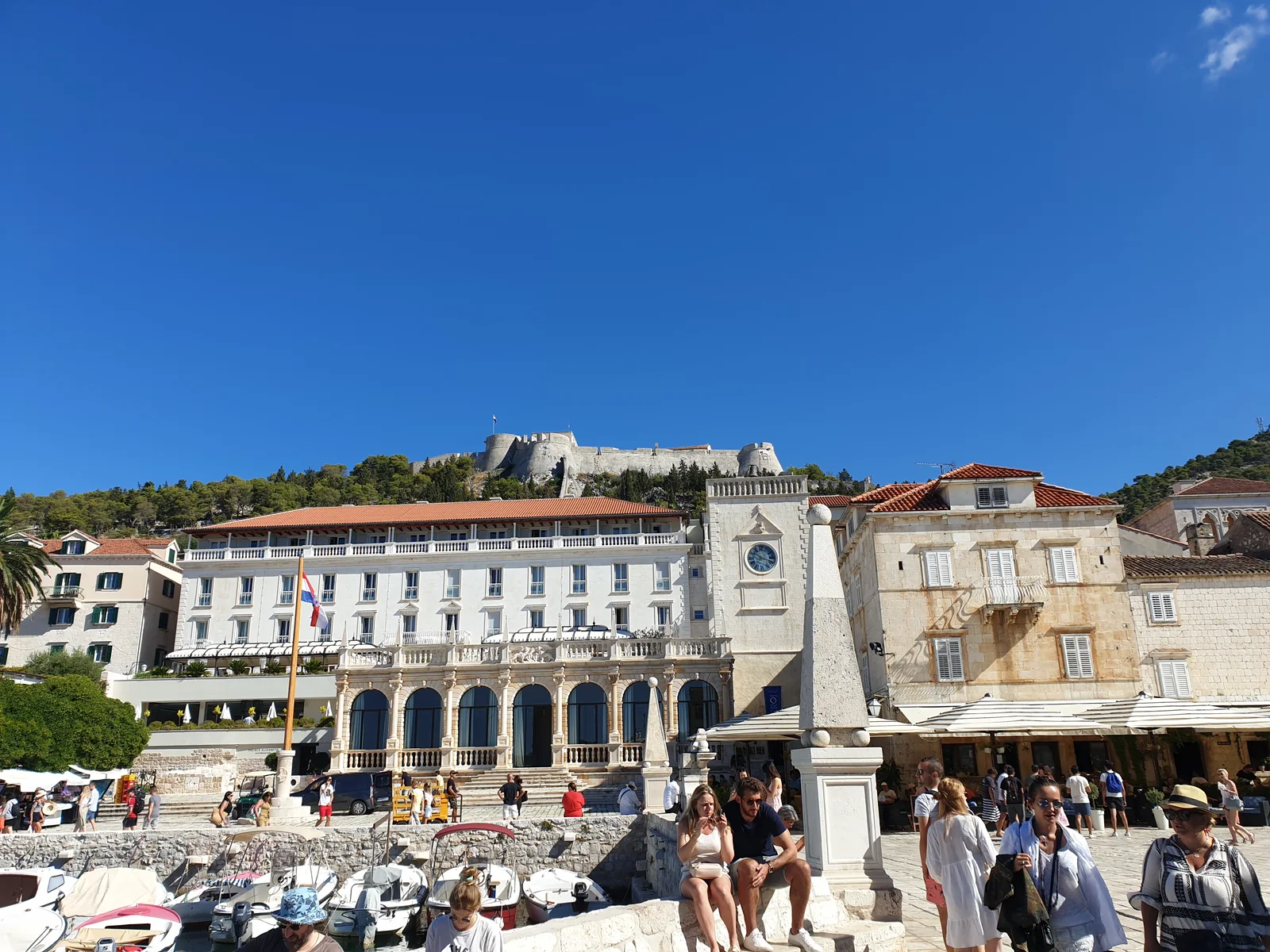
The fast boat lands you right on Hvar Town's harbour — the quicker of the two crossings. No car, no island driving — you simply walk off into the old town.
Good for: visitors without a car, and anyone happy to focus on Hvar Town, the fortress and the harbour.
The big ferry is the slower, roomier crossing and lands near Stari Grad on the island's north side. With your own wheels you can string together two or three places in a day.
Good for: visitors who want to see more of the island — Stari Grad, Jelsa, Vrboska — at their own pace.
Not to scale — a schematic of the crossing. Always check current sailings before you plan around them.
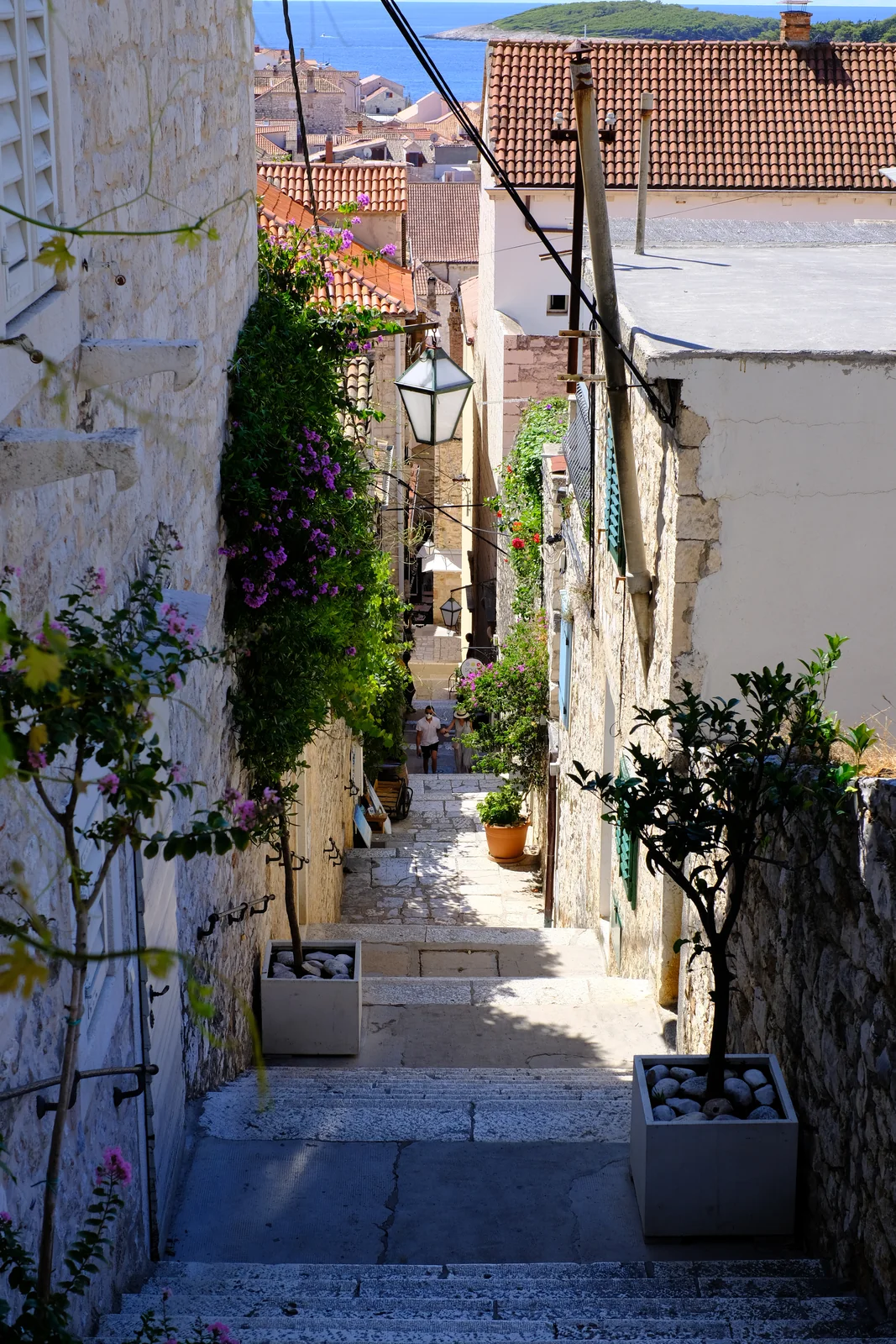
Hvar Town is the reason most people cross, and it earns it: a walled Venetian harbour town with a huge main square, marble lanes climbing the hillside, and café tables everywhere you look. It's the busiest and most touristic place on the island — in August the harbour front is a catwalk — but the setting genuinely is that good.
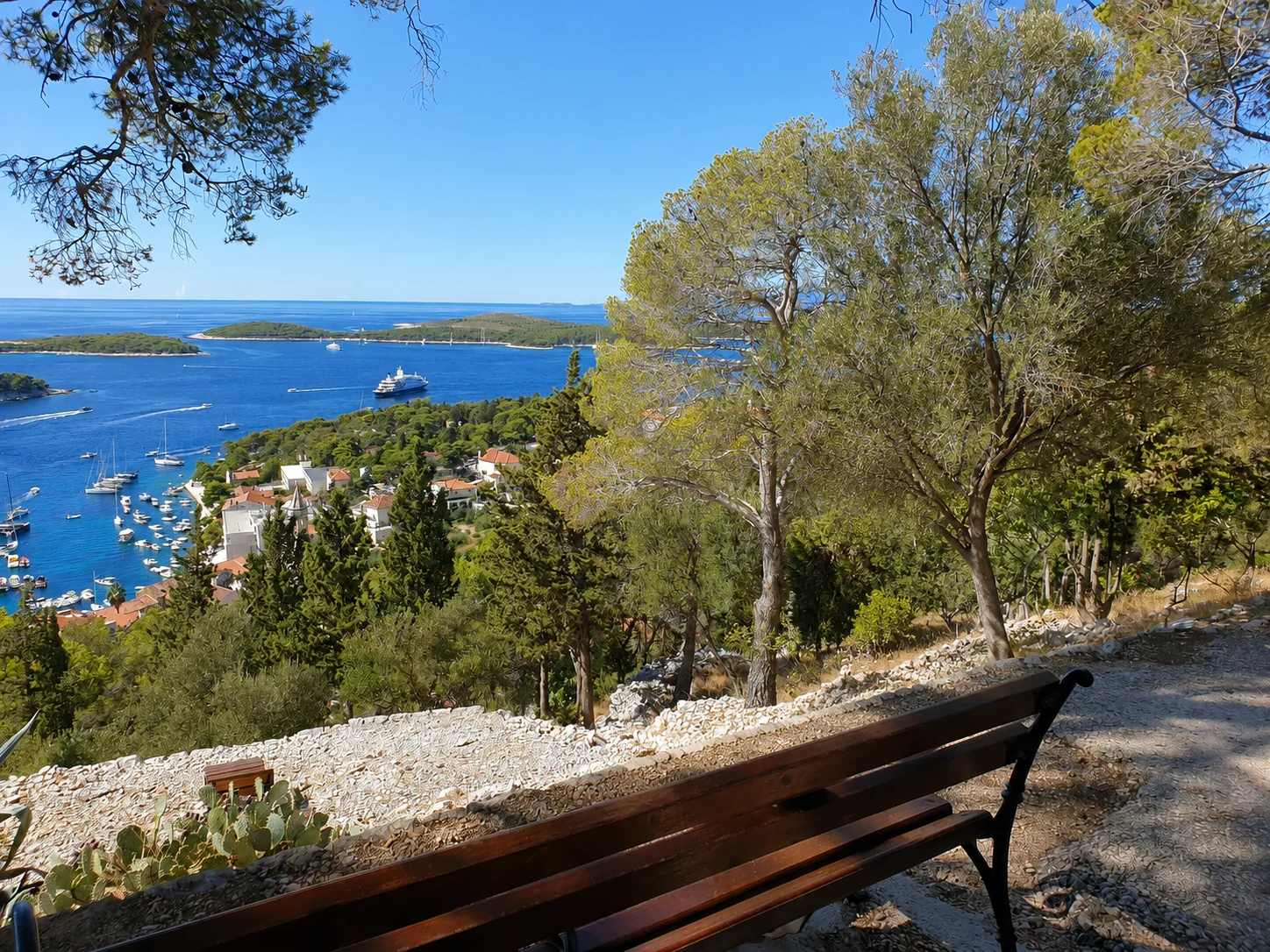
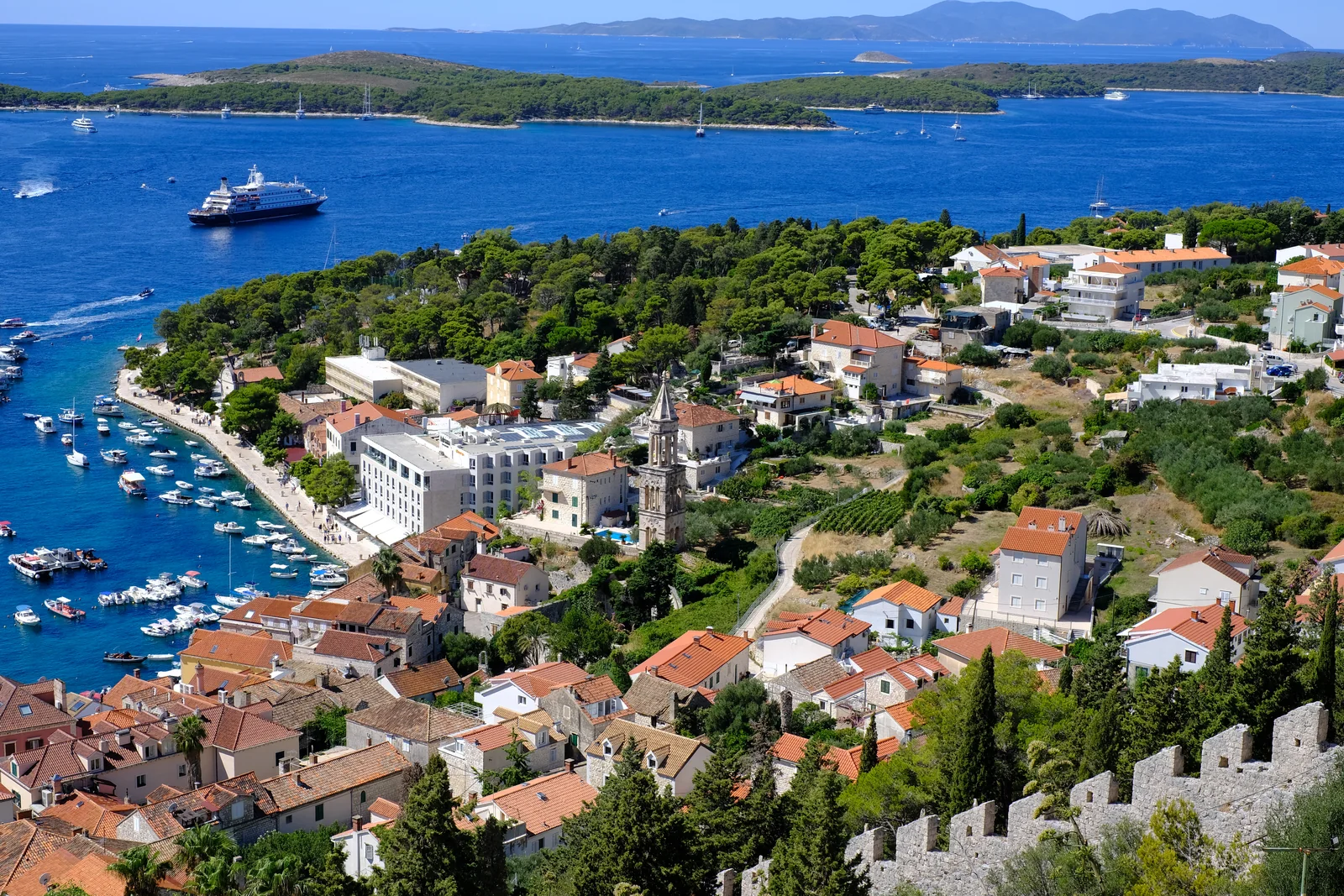
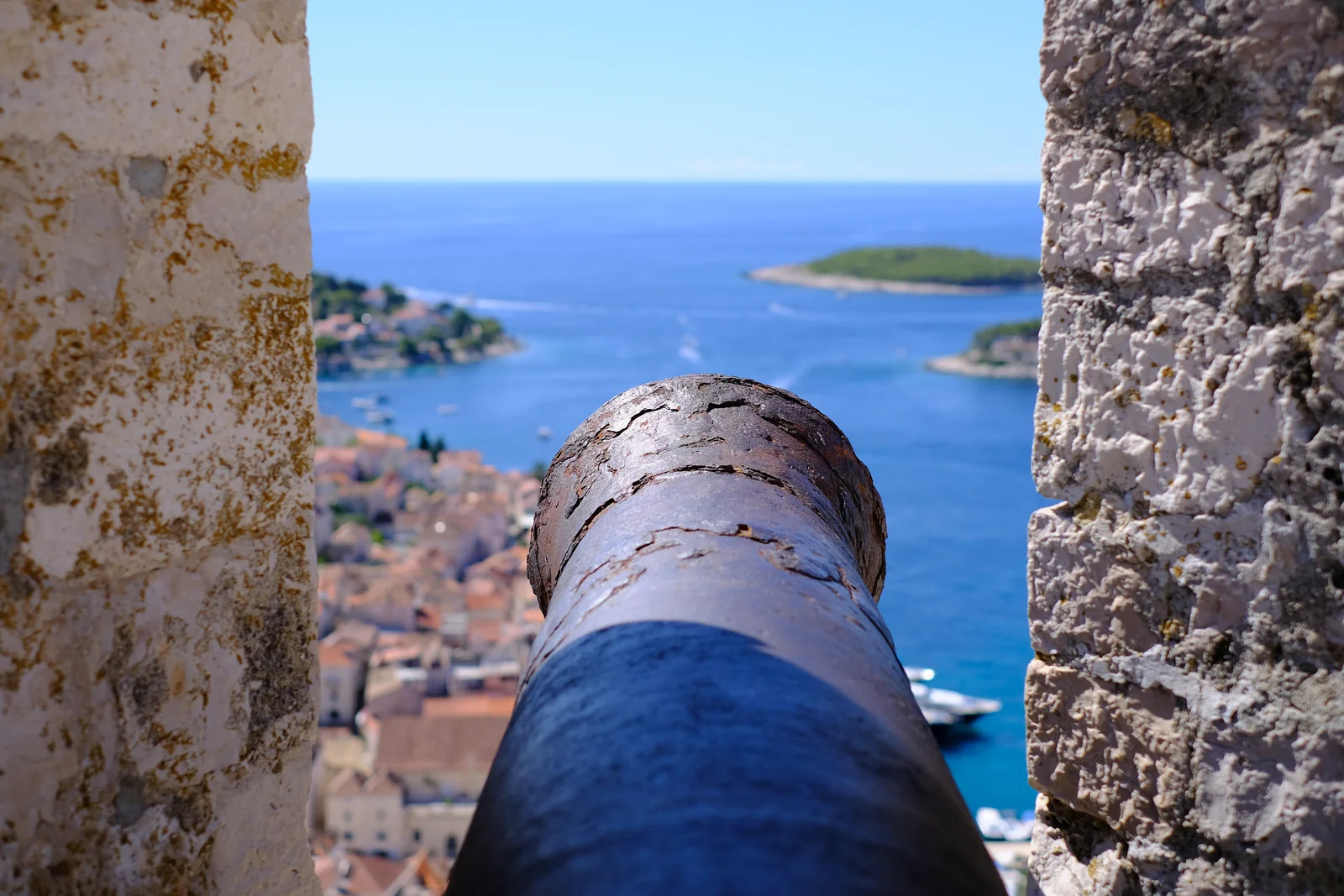
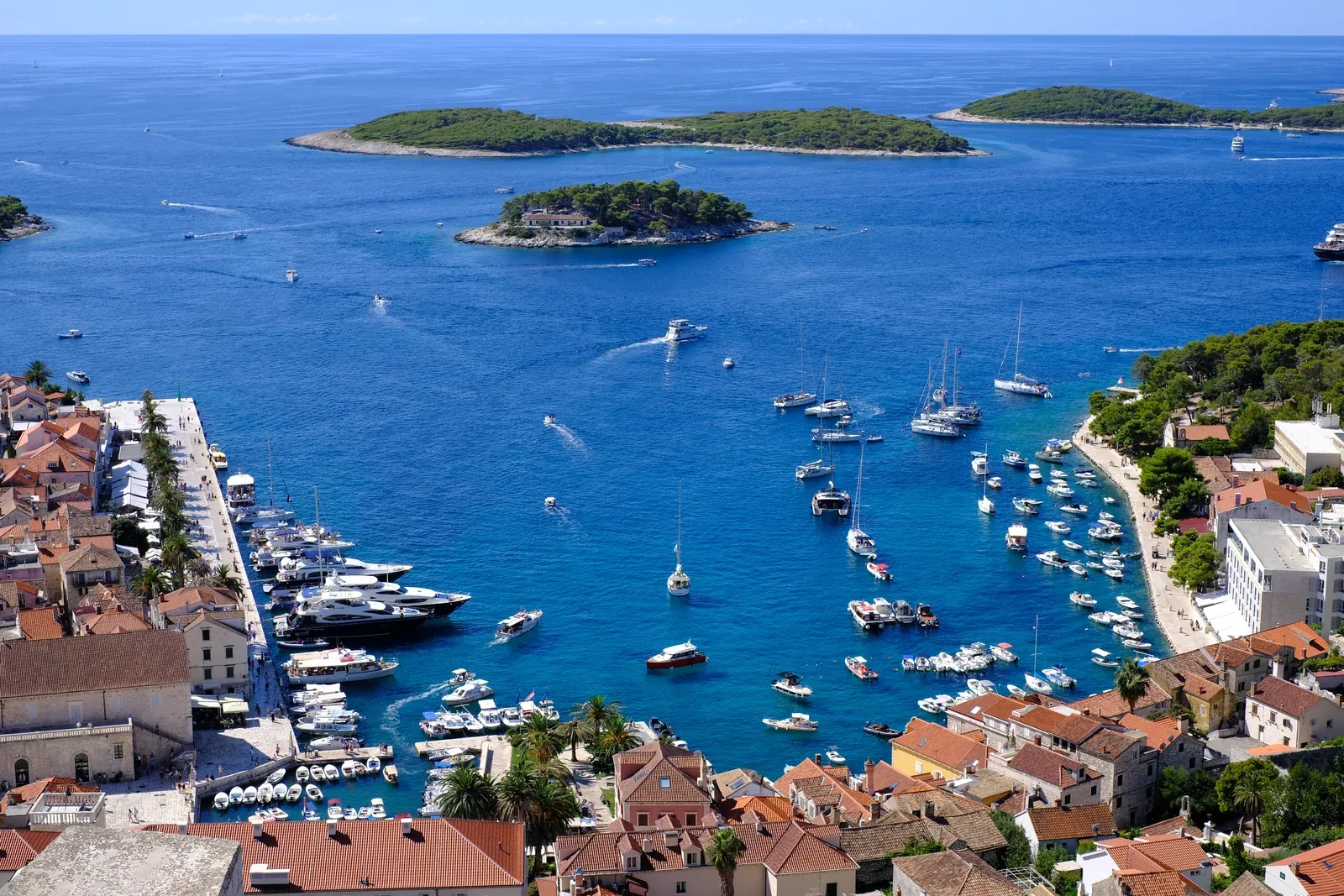
The one thing we'd plan the day around is the walk up to the Spanish fortress (Fortica). It's a steady 20–25 minute climb from the square through pine gardens, and the view from the walls — the town's rooftops below, the Pakleni islands scattered across the water — is the picture you came for. We went up mid-morning, and there's a bench on the path we didn't want to leave.
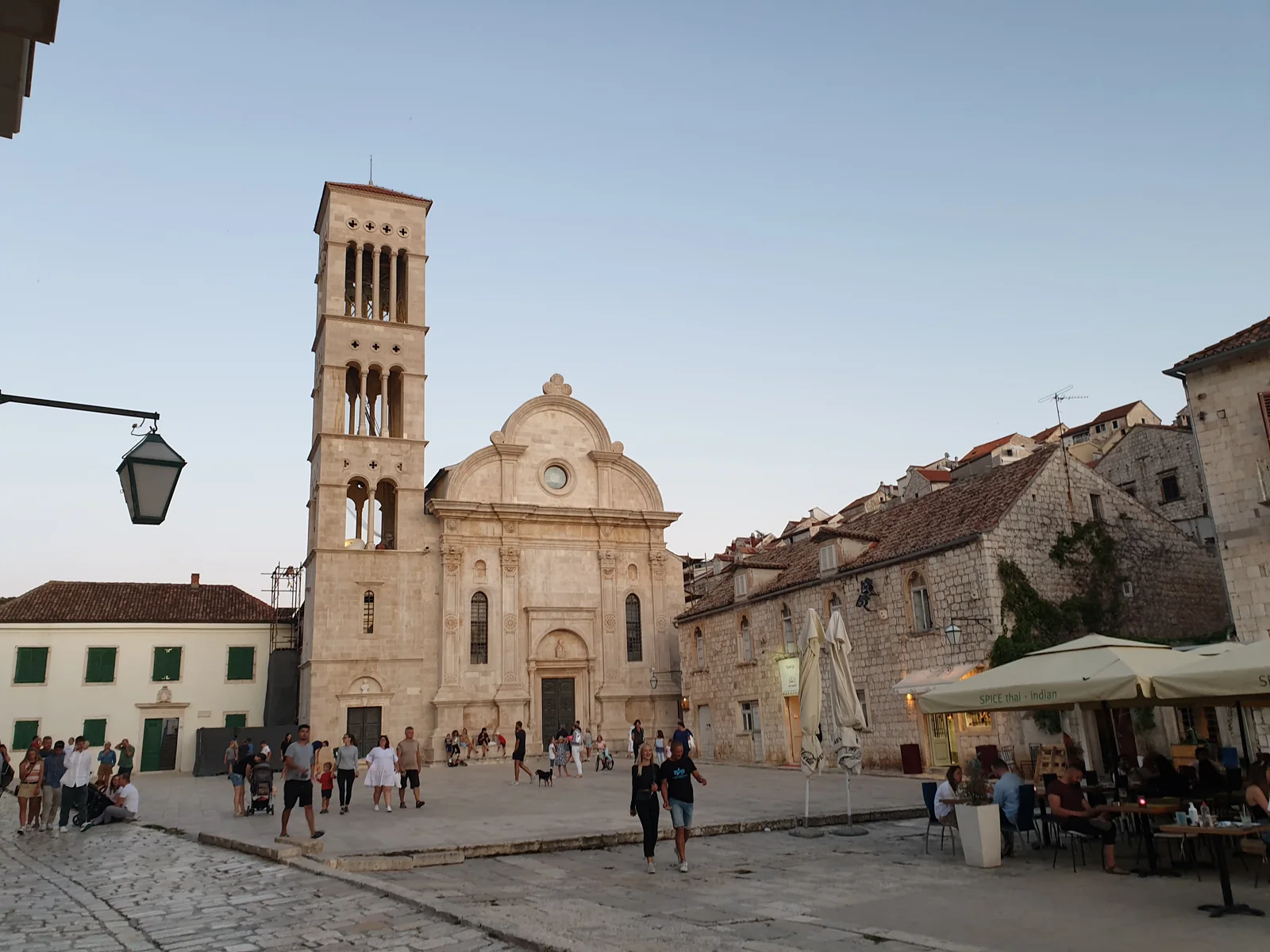
Back down in town: the harbour front for people-watching, the cathedral square for a coffee, and the lanes off the square for lunch a row or two back from the water.


Three quieter reasons to bring a car across. We'll be straight with you: we haven't photographed these towns properly yet — that scribbled note was the plan — so rather than borrow pictures, here's the honest short version.
One of Europe's oldest towns, at the end of a long sheltered bay — and where the car ferry lands. Noticeably calmer than Hvar Town: a compact stone centre, a slow waterfront and enough konobas and cafés for a proper unhurried lunch. If you arrive by car ferry, it's the natural first stop.
A small harbour town on the north coast, between pines and vineyards. Less polish, more everyday island life — a good choice if you want a quieter square, a swim and more island feeling without the Hvar Town bustle. Realistic with your own car.
The smallest of the three, threaded along a narrow inlet crossed by little bridges. It's a stroll-and-photos stop rather than a half-day: pretty, quiet, and easy to combine with Jelsa next door if the ferry times allow.
The wooded islets scattered just off Hvar Town's harbour. Taxi boats shuttle across from the riva to beaches and bays in season, and from the fortress they look close enough to touch.
Honestly, though: on a day trip they're a bonus, not a plan. Only add them if the boats are running, the queue is short and you're comfortably ahead of your return sailing. If you have to choose, the fortress climb beats the boat hop.
The simplest version of the day, and for most first-timers the best one. Everything is on foot.
You see more of the island, but the day lives and dies by the ferry timetable — check the sailings first and plan the return with a margin.
Blue Cave tours run from Trogir and Split in season, but they're a different kind of day out: a long, tour-based boat trip to Biševo that depends heavily on weather and sea conditions, with Hvar Town as one brief stop among several.
This guide is about seeing Hvar itself, at your own pace. If a big organised boat day is what you're after, our Trogir boat tours page covers the options — and a separate Blue Cave guide may follow later.
Drive or take the bus to Split ferry port (roughly 30–40 minutes depending on traffic), then either a passenger catamaran straight to Hvar Town (the faster option) or the car ferry to Stari Grad (slower, but it takes your car). Sailings are seasonal — always check the current timetables before you go.
Yes. Take the catamaran from Split to Hvar Town and stay on foot — the harbour, the old-town lanes and the fortress climb fill a day comfortably without any transport on the island.
One day is enough for Hvar Town and perhaps one other place — not for the whole island. Pick a clear route, start early and leave a proper margin for the return ferry.
Catamaran if you're on foot and want Hvar Town, the fortress and the harbour. Car ferry to Stari Grad if you want to drive to several places — Stari Grad, Jelsa, Vrboska — but plan carefully around the sailings.