The good news: Split Airport sits right next to Trogir, so you can be in the old town minutes after landing. Here's everything else worth knowing before you go.
Trogir is one of the easiest places on the coast to reach — the airport is almost on its doorstep.
Just a few kilometres away — a 5–10 minute taxi or transfer. The cheapest option is the airport shuttle bus toward Trogir.
City bus line 37 runs frequently between Split and Trogir via the airport. In summer, a seasonal catamaran also links the two harbours.
Trogir is just off the main coastal road and the A1 motorway. Easy to reach, but leave the car outside the old town (see our parking guide). Compare car rental at Split Airport.
A pre-booked airport transfer takes the guesswork out of arrival. For exploring Čiovo and the coast on your own schedule, a hire car often costs less than you'd expect outside peak season. See our full Split Airport to Trogir guide.
Compare hire cars →* Affiliate link to Discover Cars — a free price comparison across providers.
The historic island is car-free. Park on the mainland side or on Čiovo and walk in over the bridge — it's only a few minutes across.
Croatia uses the euro. Cards are widely accepted, but carry some cash for markets, small konobas and parking machines. Tipping around 10% is normal for good service.
May, June and September bring warm sea, lighter crowds and better prices. July and August are hot and busy — book early and start sightseeing before mid-morning. See our best time to visit Trogir guide.
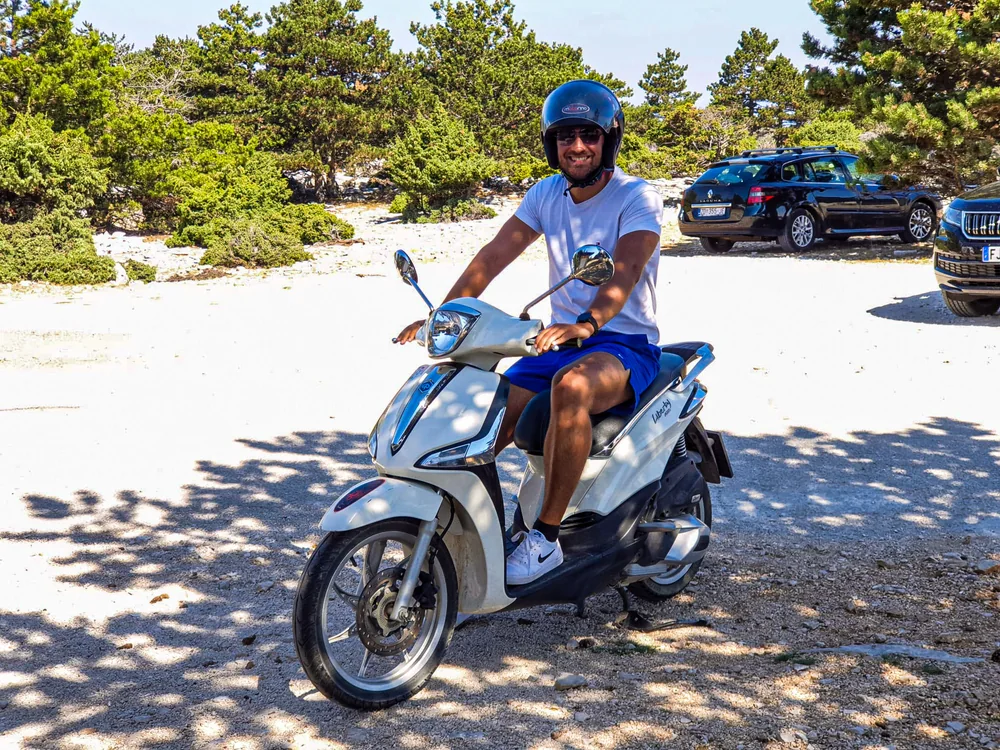
The old town is tiny and entirely walkable. For the beaches and Čiovo coves, use local buses, a taxi, or hire a car or scooter for the day. Skipping the rental entirely? See our guide to Trogir without a car.
Split Airport (SPU) is only 5–10 minutes from Trogir. Options are a private transfer, a taxi, the local bus (line 37) or a hire car — see our Split Airport to Trogir guide, or compare a hire car at Split Airport.
The old town is car-free, so you leave the car outside and walk in over the bridge — a few minutes at most. Our Trogir parking guide has all five car parks on a map, with notes on which ones fill first.
Croatia uses the euro. Cards are widely accepted, but carry some cash for markets, small konobas, parking machines and bus tickets.
By boat — organised tours and private charters run to the Blue Lagoon, Šolta and beyond, and a summer catamaran links Trogir and Split harbours. See our Trogir boat tours guide, or pick a base in our best places to stay in Trogir guide.
You've got the practical bits sorted — now pick a place to stay and the day trips worth booking.