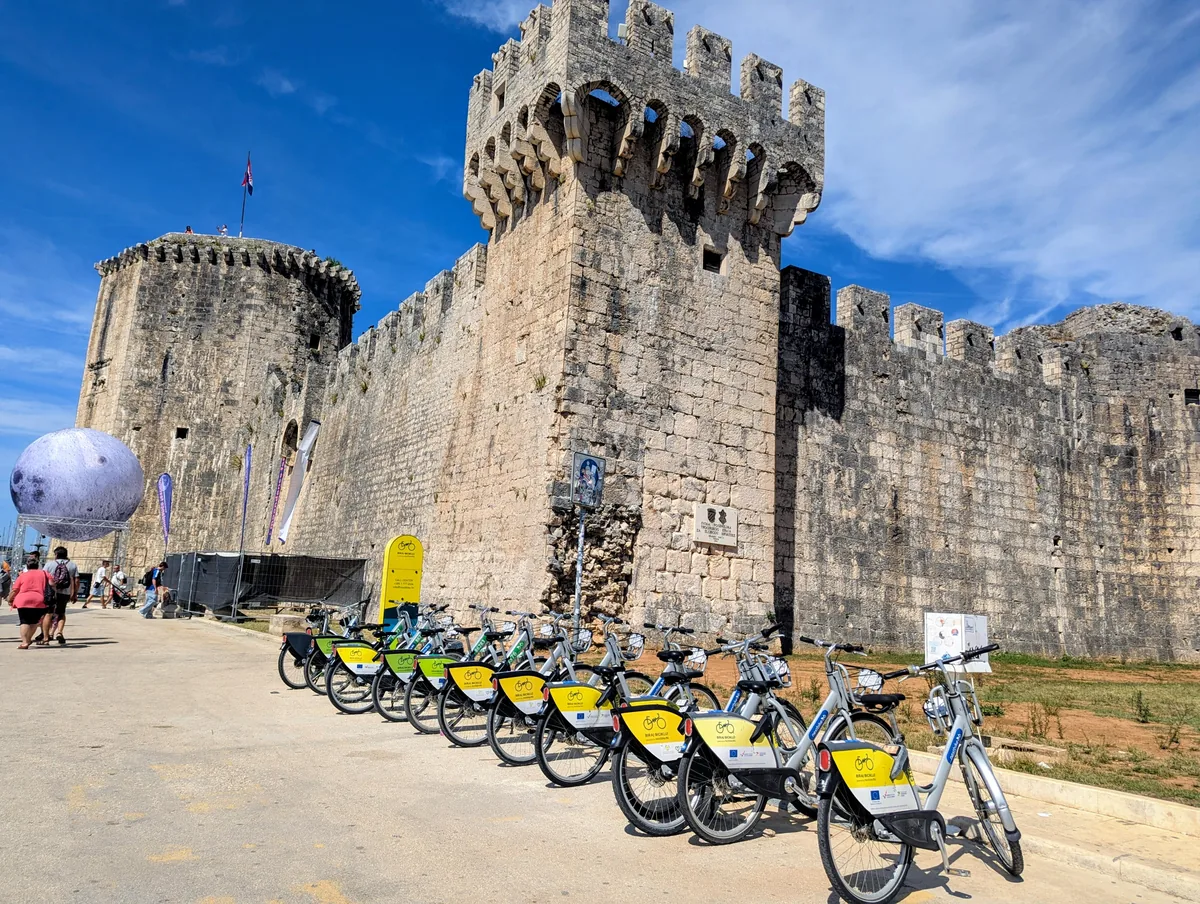
Can you enjoy Trogir without renting a car? Mostly, yes — and for some trips it's genuinely the easier way. Here's what works on foot, by bus and by boat, where it gets awkward, and when a car really does earn its keep.
Written by Ante Milic · Last updated July 2026
Your address decides most of a car-free trip. Get this right and everything else is easy.
The sweet spot. From the old town or the streets just across the north bridge you can walk to the Riva, the green market and the bus station in minutes — and the bus station is your gateway to the airport, Split and the beaches. Compare areas in our where to stay guide.
The near side of Čiovo, just over the bridge, is genuinely walkable. But addresses further along the island can mean a steep 30–40 minute walk in summer heat, and "sea view" often means "up a hill". Fine with a car; tiring without one, especially with luggage.
Quiet and pleasant, with a flat seafront walk of roughly 15–25 minutes into town — or a short bus or taxi hop. Workable without a car if you don't mind the stroll; less ideal if you plan several town evenings a week.
Honest note: no single accommodation is "the" right answer here — judge any listing by its real walking distance and gradient, not the line on the map.
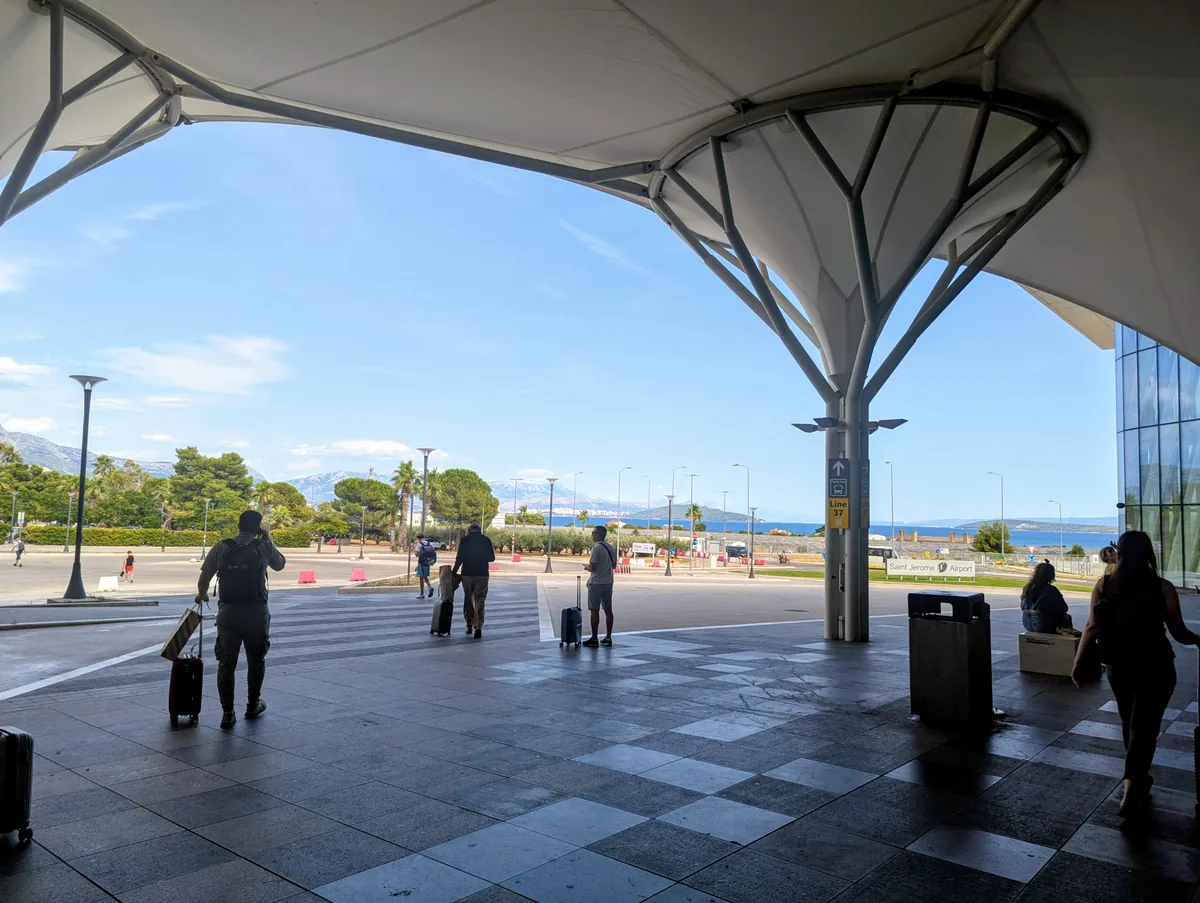
This is the easy part — the airport practically neighbours Trogir.
Bus line 37 (Split – airport – Trogir) is the budget option and stops near the airport; timetables are on the operator's site — Promet Split.
Taxis wait outside arrivals, and both Uber and Bolt pick up at Split Airport — compare the apps' upfront fares with the rank before choosing. The ride to Trogir is a matter of minutes.
A private transfer means a named driver and no queue — most useful late at night, with children or with lots of luggage. All options are compared in our airport transfer guide.
📷 Our photo
The historic island is car-free and tiny — you cross it in minutes. The Riva, the market, the bus station and both bridges are all within an easy stroll of each other.
The near Čiovo shore is a pleasant walk across the old bridge. The further you go along the island, the more a local bus or taxi earns its place — distances stretch quickly.
Local buses link Trogir with Split, the airport and nearby villages; taxis and Uber fill the gaps in the evening. Uber lists Trogir as a city of its own and says pickups here can take longer than in bigger places, so book ahead for an early flight or a late dinner. In July and August allow extra time — the coast road clogs, with or without your own car.
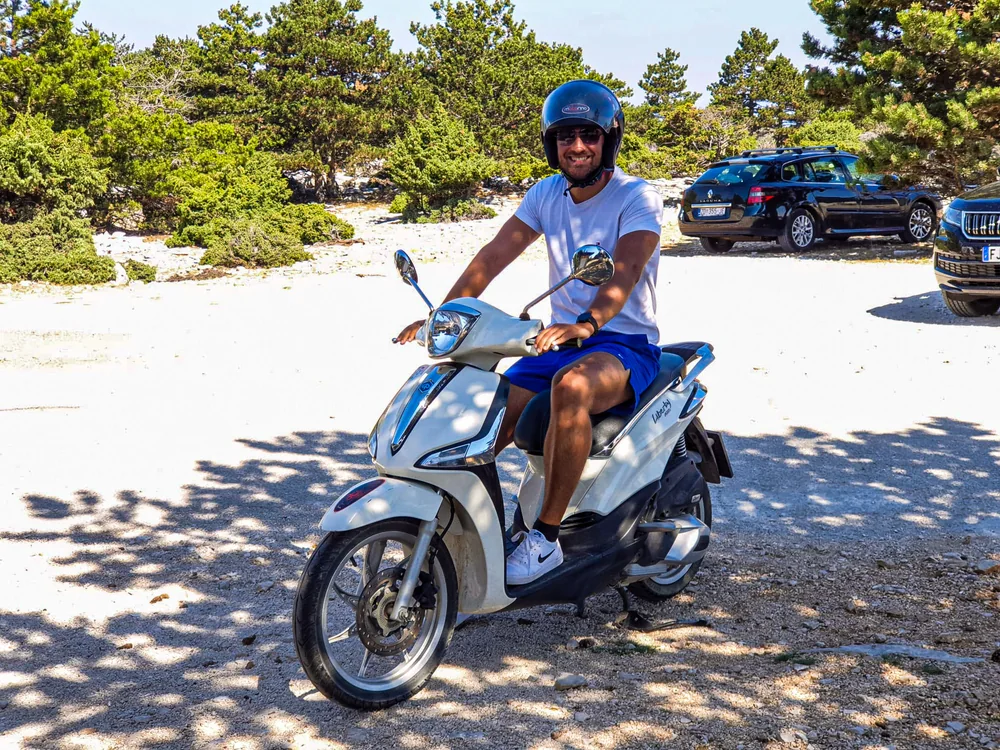
The flat seafront towards Seget is a nice easy ride. Beyond that, summer heat, traffic and hills make cycling a mixed pleasure here — treat it as a morning activity, not your transport plan.
📷 Our photo
You won't run out of swimming spots — but be honest with yourself about distances in the heat. The full profiles live in our Trogir beaches guide.
The near Čiovo shore and the flat seafront stroll towards Seget Donji cover an easy everyday swim. Pantan, east of town, is reachable on foot or by a short bus hop — flat, shallow and the closest thing to sand here.
Okrug Gornji ("Copacabana") and Medena are the classic fuller-facility beaches — both an easy taxi ride, a local bus, or in season a boat taxi across the channel to Okrug. Doable without a car, busy in August.
The quiet coves at the far end of Čiovo — Kava and around Slatine — are the ones where a car (or the seasonal Bura Line boat, which also calls at Slatine) makes the difference. Check the evening return before you commit; the last connection back is earlier than you'd like.
Several of the region's best days out are genuinely car-free-friendly — a few just need an early alarm and a timetable check.
Half a day or more, no car needed at all: bus line 37 or, in season, the Bura Line boat from the Riva (roughly an hour on the water; tickets on board). Main thing to check: the day's return departures. Full plan in our Split day trip guide.
A full day: you connect through Split's ferry port, then the ferry to Supetar. Very doable car-free if you start early; on the island itself, buses and taxis exist but thin out — the main difficulty is fitting Zlatni Rat and the return comfortably into one day. Details in our Brač guide.
Also a full day through Split: passenger catamarans land you in Hvar Town. The catch is seasonality — sailings and the crucial last boat back change through the year, so check the operators' current timetables first. Our Hvar guide covers the realistic routes.
Without a car this is a regional-bus-plus-connections day or, more simply, an organised tour with pickup — the tour trades flexibility for zero logistics, and neither is automatically "better". Entry and transport details change seasonally; check current information with the national park and your chosen operator. Background in our Krka guide.
The far Čiovo coves, dawn starts before the buses wake up, stringing several inland or coastal stops into one day, and arrivals with serious luggage or small children. For those trips, wheels are simply better — see our car rental guide for how that works from the airport.
Parking is the town's weak spot — the old town is car-free and the nearby lots fill early in summer. Add high-season traffic on the coast road and the honest picture is: a car parked for days costs money while you walk everywhere anyway. A single rental day for the one trip that needs it is often the smarter shape.
Three or four unhurried days, all without your own wheels — adjust freely, or let our Trogir day planner shape a day around the weather and your energy.