Dalmatian cooking is simple and easy to get right — if you know what to order and where to sit down for it. Here's the food itself: the dishes worth trying, the kinds of places that serve them, and how to order without the tourist-trap surcharge.
Looking for specific restaurant names? See the places we actually return to in Trogir — this page is about the food itself.
Dalmatian cooking is simple and seasonal — grilled fish, olive oil, herbs and time. Look for these.
The catch of the day is priced by weight and grilled whole. Ask what came in that morning.
Meat or octopus slow-cooked under an iron bell with coals on top. Usually order a day ahead.
Squid-ink risotto, and beef braised in sweet wine — the two Dalmatian classics to try once.
📷 Our photo
Not named recommendations — these are the three kinds of eating-out situations Trogir does well, and when to choose which. Menus and hours shift with the season, so check what's current before you set off. For the specific places we go back to by name — Mirkec, Mali Raj, Rico and more — see where we eat in Trogir.
A konoba is a traditional Dalmatian tavern — stone walls, a short menu, grilled fish and a carafe of house wine. The best ones sit on the quiet lanes a street or two back from the cathedral, where prices drop and the cooking gets more personal.
For fresh fish with a sea view, head to the Riva promenade or cross to the Čiovo side. You pay a little extra for the setting, but the fish is genuinely local. Go for the daily catch rather than anything frozen on the menu.
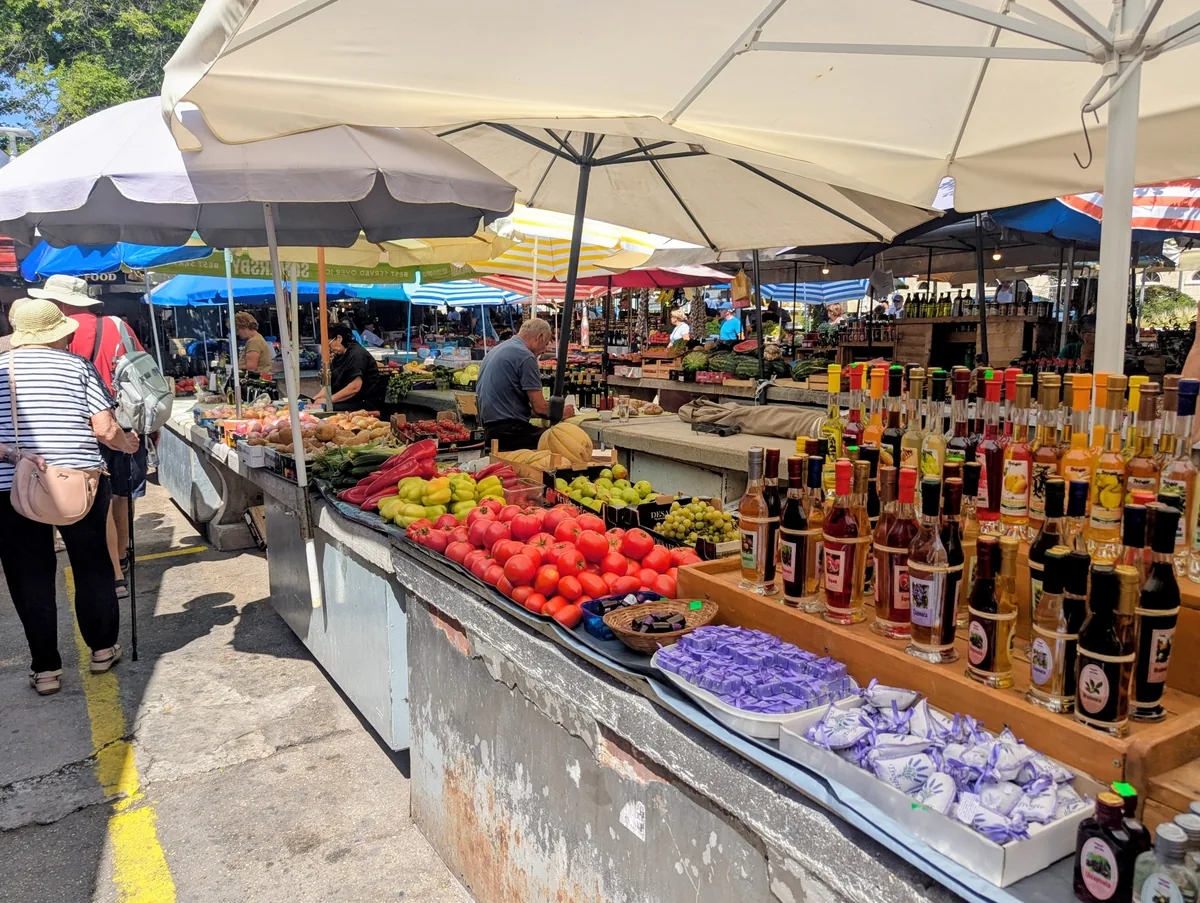
For a budget lunch, grab burek (filled pastry) from a bakery, a wood-fired pizza, or fruit and cheese from the small green market by the bridge. Perfect to take down to the Riva or off to the beach.
Restaurants right on the main square and the busiest stretch of the Riva charge for the location. Quality usually improves the moment you turn off it.
Laminated menus with photos in six languages are aimed at passing tourists. A short, hand-written or daily-changing menu is a good sign.
Fish priced by the kilo and chosen at the table is fresher than anything fixed-price on the menu. Don't be shy to ask the weight first.
The good konobas are small and fill up. In peak season, reserve a table earlier in the day, especially for a group.
📷 Our photo
A wine and food tour pairs local Plavac Mali with Dalmatian bites — an easy way to find flavours you'd otherwise miss. It's part of the wider things to do in Trogir.
* Affiliate link to GetYourGuide — free for you; we earn a small commission on a booking.
One street back from the main square and the busiest stretch of the Riva. The best konobas sit on the quiet lanes, where prices drop and the cooking gets more personal — handy if you're staying in or near the old town.
Dalmatian cooking: grilled fresh fish priced by the kilo, peka (meat or octopus slow-cooked under an iron bell), black squid-ink risotto and pašticada, with local olive oil and Plavac Mali wine.
Konoba mains start from around €15 and fresh fish from about €25, more for the daily catch by weight. A bakery burek or pizza lunch costs just a few euros. Prices are higher right on the square.
Yes — wine and food tours pair local Plavac Mali with Dalmatian bites, bookable online. They're an easy way to find flavours you'd otherwise miss; see our things to do in Trogir guide for more.
Eaten well? Find a base for the night and the best swimming spots for tomorrow.